Commercial Pilot Licence (CPL) Benefits: Is a DGCA CPL Worth It in 2026?
A DGCA Commercial Pilot Licence (CPL) is the legal qualification that lets you be paid to fly. Its main benefits are access to airline, charter, cargo and instructor jobs, a licence structure aligned to ICAO standards, and a base for later ratings and the Airline Transport Pilot Licence (ATPL).
A CPL is a licence, not a guaranteed job. This guide explains what it unlocks, what it does not, and how to weigh the investment of time and money before you start.
Updated October 2026 · Editorial team, Golden Epaulettes Aviation
Key facts: commercial pilot licence benefits
- What it allows: flying an aircraft for hire or reward as a pilot, subject to ratings and medical validity.
- Issued by: the Directorate General of Civil Aviation (DGCA), following ICAO standards.
- Typical eligibility: minimum age 18, Class 12 with Physics and Maths (or equivalent), Class 1 medical and required flying hours; confirm in the current DGCA rules.
- Jobs unlocked: airline first officer (with type rating), charter, cargo, corporate, flight instructor and more.
- Not enough alone: airlines also need an instrument rating, a type rating and a successful selection process.
- Global use: a DGCA CPL can be converted or validated abroad, but foreign regulators have their own steps.
What does a CPL allow you to do?
A CPL authorises you to act as a pilot of an aircraft for hire or reward, within the privileges of your ratings. Without it, you can fly only as a private pilot or a student, which does not allow paid flying.
The licence is issued by the DGCA after you pass the CPL theory exams, meet the flying-hour and medical requirements and complete the skill test. For the full steps, see our Commercial Pilot Licence overview and the CPL requirements guide.
Top benefits of a Commercial Pilot Licence
| Benefit | What it means in practice |
|---|---|
| Paid flying career | You can work as a pilot with an airline, charter operator, cargo company or flying club |
| Multiple career routes | Airlines, business aviation, aerial survey, instructor roles and more |
| Foundation for ATPL | The CPL hours and experience lead to the ATPL and command roles |
| International recognition | The licence is built on ICAO standards, easing conversion to other countries' licences |
| Structured progression | From first officer to captain, with increasing responsibility and pay over time |
| Skill transferability | Navigation, meteorology and regulation knowledge stays useful across aircraft types |
Salary data changes with airlines, aircraft and experience. For an overview, read our commercial pilot salary guide.
Career options after a CPL
- Airline first officer: after instrument rating, type rating and airline selection.
- Charter and business aviation: smaller operators and corporate flight departments.
- Flight instructor: train students after obtaining the instructor rating, a common way to build hours.
- Cargo and specialised flying: freight operators, survey and utility flying.
Our guides on what happens after a CPL and commercial pilot career benefits in India go into each route.
Limits and things to check
- A CPL does not guarantee a job. Hiring depends on airline demand, your hours and selection results.
- You also need a valid Class 1 medical; medical failure can end a flying career.
- Training is a major financial commitment. Compare the cost of a CPL in India and plan for funding, including loans and scholarships.
- Type ratings are usually airline-specific and may be separately funded.
CPL vs PPL: why the difference matters
| Aspect | PPL | CPL |
|---|---|---|
| Paid flying | Not allowed | Allowed |
| Typical purpose | Recreation or first step | Professional flying career |
| Medical | Class 2 | Class 1 |
| Next step | Add ratings or move to CPL | Add type rating, instrument rating and ATPL |
See our full comparison of the PPL and CPL in India.
Who should get a CPL?
A CPL suits candidates who want flying as a profession, can pass a Class 1 medical, are prepared for years of study and training, and have a realistic funding plan. It is a poor fit if you only want to fly for fun.
If you are unsure, start with a Class 1 medical, because it tells you early whether the profession is open to you.
What this means for your pilot career
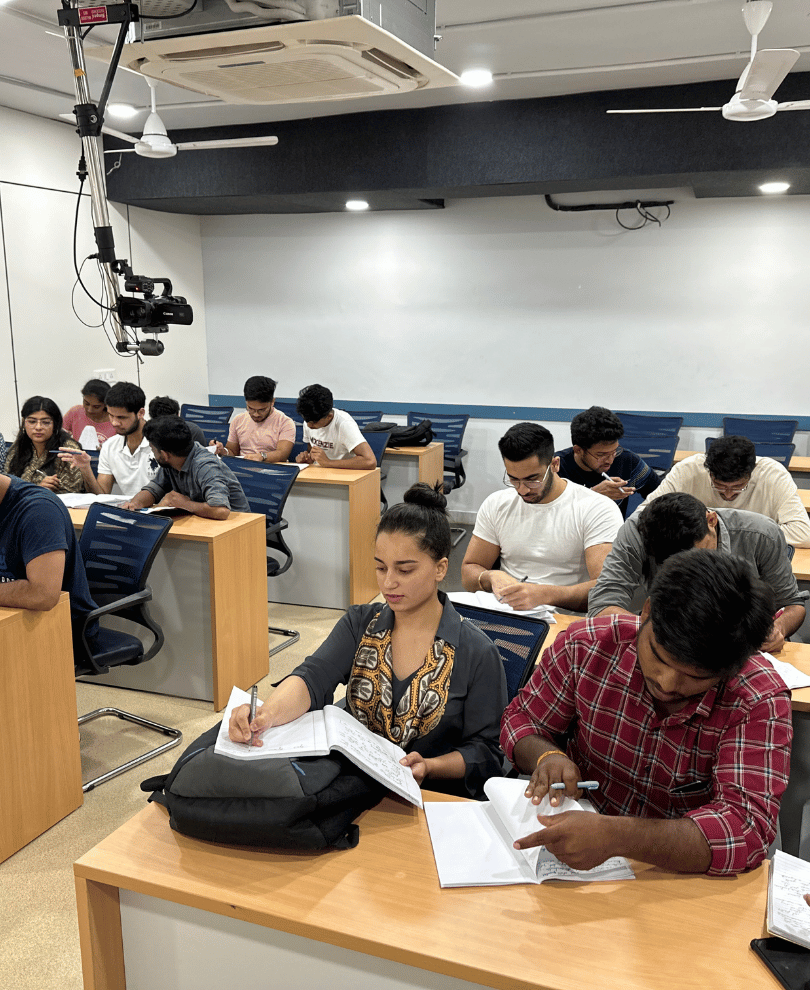
The licence is the first formal milestone. You can begin the theory side with our DGCA CPL ground classes, arrange your DGCA computer number, and book your Class 1 medical. Flying training is done at a DGCA-approved flying school.
Once you hold the licence, you can move toward the ATPL and airline preparation.
Sources and official references
- DGCA India (accessed October 2026)
- Ministry of Civil Aviation, India (accessed October 2026)
- ICAO – Personnel Licensing (Annex 1) (accessed October 2026)
- DGCA computer number and exams portal (accessed October 2026)
Next steps
Thinking about a CPL? Talk to our counsellors about eligibility, exam preparation and funding options in a free counselling call.
Talk to a counsellor on WhatsAppReviews & Discussion
Write a review
No reviews yet. Be the first!