Pilot Training
Location
Guidance
Capt. Tomar Awdhesh
Golden Epaulettes Aviation's ATPL Radio Aids and Instruments classes prepare DGCA CPL holders for the Airline Transport Pilot Licence (ATPL) Radio Aids and Instruments written paper and the DGCA oral examination. The indicative 6–8 week course covers radio propagation, ADF/VOR/DME/ILS, radar and TCAS, GNSS and RAIM, pitot-static and gyroscopic instruments, IRS, compass systems, autoflight and EFIS displays, taught in Delhi or live online by A320 commanders.
We will contact you shortly
Thank you for applying. Our aviation expert will reach out to you on WhatsApp with the next steps of your pilot journey.
Go To Home PageAccess the industry's most rigorous DGCA-simulated testing environment.
Cadets Active
196+
Difficulty
Medium
Cadets Active
244+
Difficulty
Medium
Cadets Active
69+
Difficulty
Medium
Cadets Active
136+
Difficulty
Medium
ATPL Radio Aids and Instruments classes at Golden Epaulettes Aviation prepare DGCA CPL holders for the Airline Transport Pilot Licence (ATPL) Radio Aids and Instruments written paper and its oral examination. The course is for pilots who need captain-level understanding of radio navigation systems, flight instruments, autoflight and flight-deck displays, both to clear the DGCA paper and to operate jet aircraft as commanders.
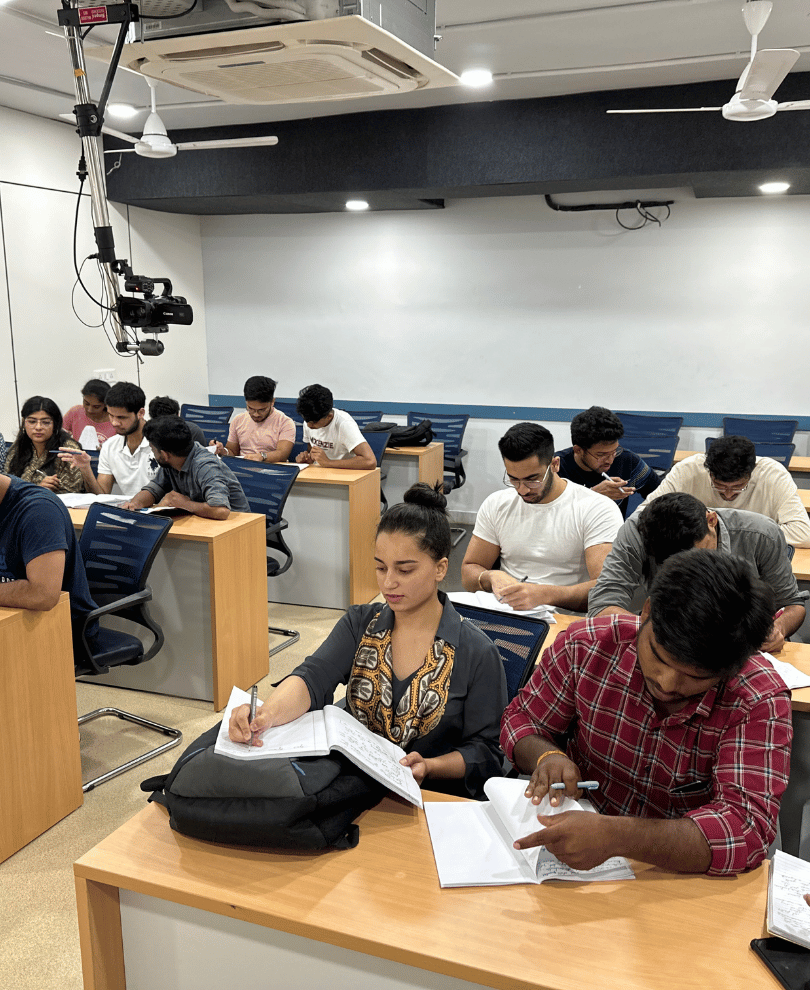
We teach in Dwarka, New Delhi and live online for pilots across India and the Gulf. A320 commanders and DGCA ground instructors lead the course, so every system is explained as it appears on a real flight deck rather than as a diagram in a textbook.
This paper combines two disciplines that the CPL syllabus treats lightly: the physics and errors of radio navigation aids, and the design, limitations and failure modes of flight instruments and automation. ATPL questions assume you will be the pilot who diagnoses a failure and chooses the safe course of action.
| Block | Systems and concepts | Typical ATPL question |
|---|---|---|
| Radio wave propagation | Frequency bands, ground and sky waves, skip distance and dead space, ionospheric effects, Doppler principle, antenna types. | Which band and propagation path explains an HF blackout on a night oceanic sector? |
| Ground-based aids | ADF/NDB errors (coastal refraction, night effect, quadrantal error), VOR principles and cone of confusion, DME slant range and accuracy, ILS localiser and glide-path geometry, categories and critical areas, MLS basics. | Calculate the ground distance from a DME reading at a given altitude, or the height at the ILS outer marker on a 3° glide path. |
| Radar systems | Primary and secondary surveillance radar, Mode S and ADS-B, airborne weather radar tilt and attenuation, radio altimeter, TCAS logic and resolution advisories. | Interpret a TCAS RA against ATC instructions and state the required crew response. |
| Satellite navigation | GNSS constellations, pseudo-range and geometry (DOP), RAIM and integrity monitoring, SBAS/GBAS and India's GAGAN, interference and spoofing, FMS position mixing with IRS. | How many satellites are needed for RAIM fault detection, and what happens to an RNP approach when integrity is lost? |
| Pressure instruments | Pitot-static systems, altimeter, VSI and ASI errors, Mach meter, air data computers, pitot blockage logic and unreliable airspeed indications. | Describe the ASI and altimeter behaviour in a climb with a blocked static port. |
| Gyroscopic and inertial instruments | Gyro properties and precession, directional gyro drift, attitude indicator errors, turn coordinator logic, ring-laser gyros, IRS alignment and Schuler period. | Compute apparent wander for a DG at a given latitude after a stated time. |
| Compass systems | Direct-reading compass errors (turning and acceleration), remote-indicating compass, flux valve, deviation and variation, magnetic dip at high latitudes. | State the compass indication during a turn from north in the Southern Hemisphere. |
| Autoflight, displays and warning systems | Autopilot modes and flight director logic, autothrust, flight management systems, EFIS/PFD/ND symbology, EICAS/ECAM concepts, GPWS/TAWS modes, flight data and voice recorders. | Identify the GPWS mode triggered by excessive descent rate close to terrain and the correct crew action. |
First Officers often assume that daily use of VOR, ILS and the FMS makes this an easy paper. The DGCA examiner, however, asks for the physics behind the display, and the oral board asks what you would do when the display is wrong.
Pilots whose CPL foundation is weak can first revisit our DGCA CPL ground classes material; we also run a short bridging block before the ATPL modules begin.
The course is sequenced so that propagation and error theory come before specific aids, and instruments are taught from sensor to display. Each block closes with a timed DGCA-pattern test and an answer-wise debrief.
Students receive system diagrams, PFD/ND display packs, formula sheets and worked-solution banks, plus recorded sessions for revision. Display reading is practised on A320 flight-deck imagery so that theory connects to what you see on the line.
Under DGCA Operations Circular 01/2025, candidates who clear the written Navigation and Radio Aids papers are forwarded by the CEO to an oral board constituted by the Flight Standards Directorate; scheduling and admit cards run through Pariksha (summary at TeamLease RegTech).
The ATPL knowledge syllabus and licence requirements are published in the Civil Aviation Requirements Section 7 and Schedule II of the Aircraft Rules, 1937 on the DGCA portal, and align with ICAO Annex 1 – Personnel Licensing.
For eligibility, timelines and the full set of ATPL papers, start with our DGCA ATPL classes overview.
Send us your CPL details, hours and the ATPL papers still pending. We will recommend a batch, help you pair Radio Aids with Navigation for a combined viva, and set a study plan around your roster. Call or WhatsApp +91 7428897782, or book a free counselling call.
Talk to a counsellor on WhatsAppNo reviews yet. Be the first!
Pilot Training
Conclave
A full-day Conclave in Delhi with active airline commanders — covering everything from medicals to the cockpit, the honest way.
Questions pilots ask about the DGCA ATPL Radio Aids and Instruments paper, the oral examination and our preparation classes.
Access high-fidelity intelligence covering air law, operational procedures, and human performance to accelerate your flight deck career.
Director & Founder | A320 Commander
When you sit with Capt. Tomar for counselling, it doesn’t feel like a formal session. It feels like talking to someone who has already walked the path you’re trying to understand. He knows how confusing the beginning can be — medicals, DGCA Computer Number, ground classes, flying school choices, budgets — everything feels overwhelming at first. He speaks honestly. If something is risky, he will tell you. If something is unnecessary, he will explain why. There are no big promises or shortcuts — just practical guidance based on real experience in aviation. The focus is simple: help you make the right decision from day one. Because one wrong step in pilot training can cost time and money. Capt. Tomar makes sure you understand the process clearly before you move ahead.
Director & Founder | A-320 Commander
Counselling with Capt. Deval Soni is deeply personal, because his journey into aviation was never smooth or handed to him easily. He understands the confusion, the financial pressure, the fear of making the wrong decision, and the emotional stress that comes with chasing a cockpit dream. He has lived that uncertainty himself. During counselling, he does not simply explain the process — he shares perspective. From medicals and DGCA Computer Number to ground school strategy, flight training choices, budget planning, and airline preparation, everything is discussed honestly. When you speak to Capt. Deval, you are not talking to a counsellor — you are talking to someone who once sat exactly where you are sitting now.
Aviation Insights
Explore expert tips, industry updates, and student success stories from the cockpit.
Training Fleet
Structured DGCA Ground Classes with a focus on Air Navigation, Safety, and Exam Readiness.