
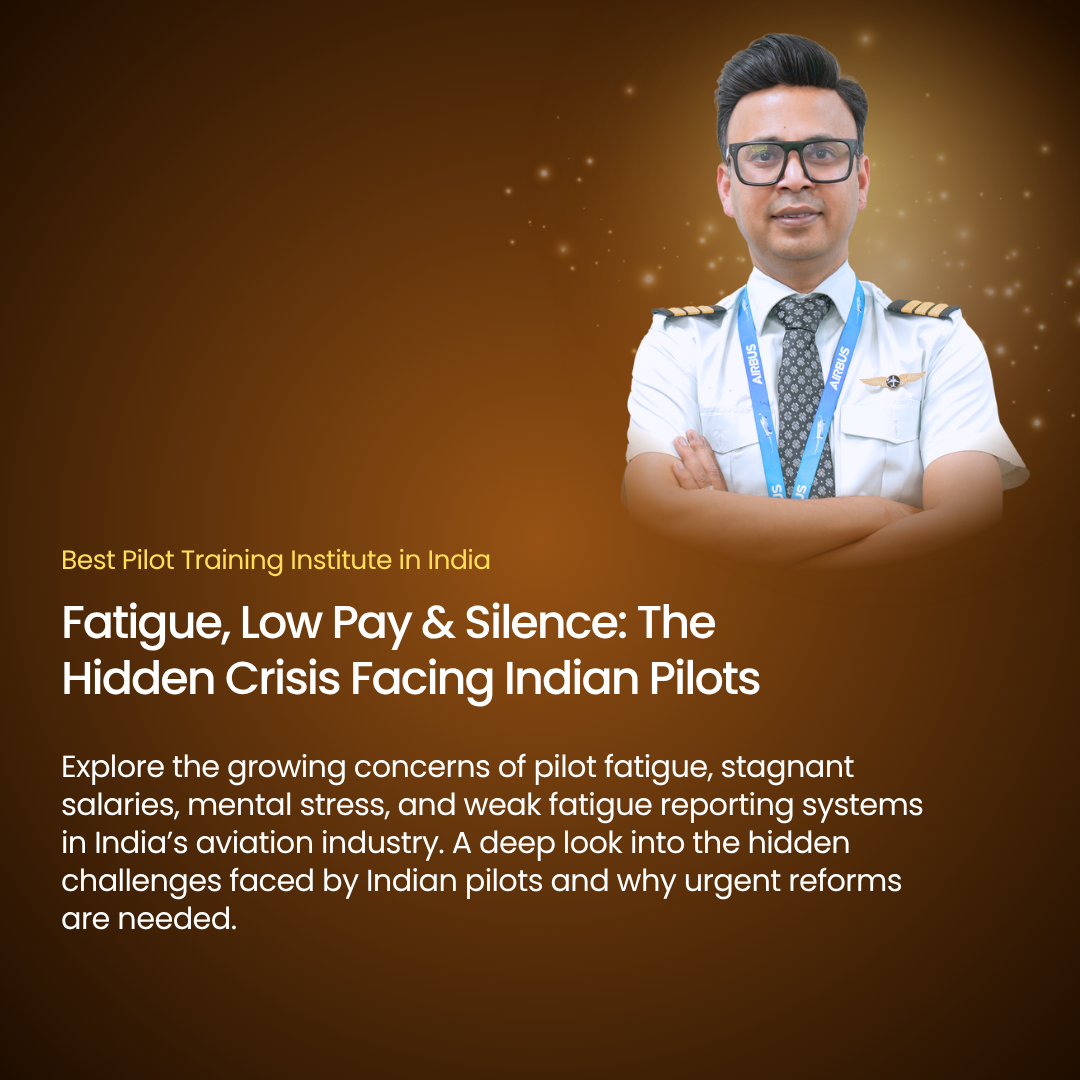
Fatigue, Low Pay & Silence: The Hidden Crisis of Indian Pilots
It has been almost one and a half years since the new FDTL norms were first proposed. Operators opposed those rules with all their might, which eventually led to modification after modification, gradually diluting the very soul of those regulations. Even today, many of those provisions are still not implemented in full spirit and continue to operate with multiple exceptions.
Recently, we lost two relatively young pilots while on active duty. Pilots flying for airlines regularly undergo stringent Class 1 medical examinations, and it appears both had no major known medical history. While the Directorate General of Civil Aviation (DGCA) is trying to put practices in place to minimise fatigue as much as possible, operators must also take responsibility for creating an environment where pilots feel genuinely free to report fatigue without fear or indirect consequences.
Unfortunately, fatigue reporting in India has remained largely ineffective for two primary reasons:
- In many cases, fatigue reports are outright rejected with minimal due diligence, and ultimately the pilot ends up losing a sick leave.
- Some airlines design extremely fatiguing rosters and then ask crew members to report fatigue only after completing the pattern. If a pilot has already flown the entire fatiguing pattern, what exactly is the purpose of reporting fatigue afterward? The justification often given is that the operator will “study the pattern for future reference” to determine whether it was actually fatiguing — which frankly sounds completely ridiculous.
We have lost two precious lives recently, yet hardly any national media has seriously covered these incidents or tried to understand what really went wrong. These are only the recent cases; India has witnessed similar incidents involving pilots on active duty in the past as well.
The DGCA, together with operators, must take a far more sympathetic and human approach towards pilots. Fatigue management cannot remain merely a software-driven compliance exercise. Pilots are not against their companies — after all, pilots are the very people because of whom airlines operate. No pilot wishes harm to his or her company. If operators genuinely engage with pilots in a meaningful manner, both sides can collectively come up with innovative and practical solutions to this deeply human problem.
Fatigue is not the only concern. Low pay has also become a major issue for Indian pilots. Pilot salaries in many segments have remained stagnant for years despite continuous inflation. In real terms, when inflation is factored in, compensation has effectively reduced.
This issue becomes even more concerning for young pilots and cadets who are investing anywhere between ₹1 crore to ₹1.5 crore to enter the profession, only to be paid salaries that often do not justify the scale of investment, stress, responsibility, and lifestyle sacrifice involved.
This is perhaps the time when operators must seriously introspect and address these pressing concerns of fatigue, compensation, and pilot wellbeing before the industry faces even deeper long-term consequences.
A Call for Collective Responsibility
At Golden Epaulettes Aviation, we believe that pilot wellbeing is the cornerstone of aviation safety. It is time for the industry to move beyond compliance and embrace a human-centric approach to support our aviators.
Introspection and meaningful dialogue between operators and pilots are essential to ensure the longevity and health of the Indian aviation sector.
Learn More